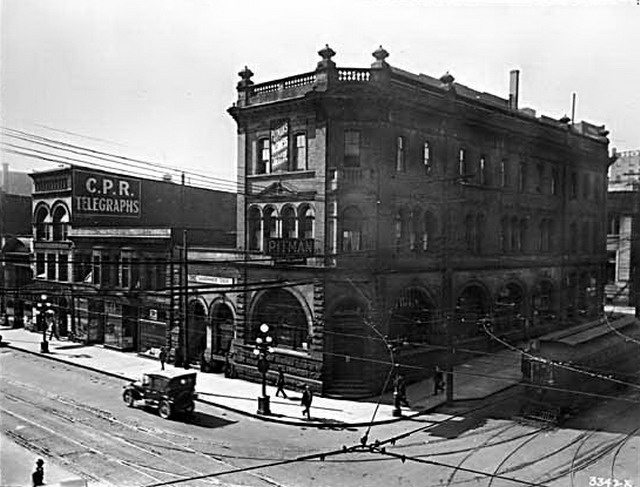
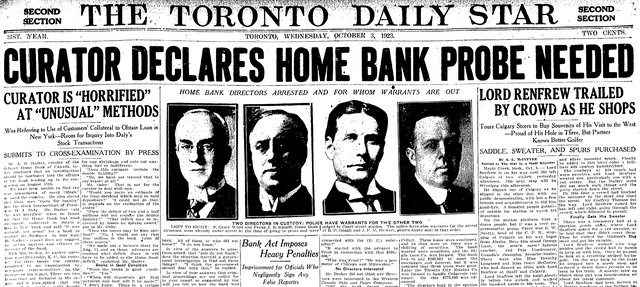
In 1923, the fifth revision of the Bank Act, whose legislative passing in 1871 would be supplemented with the enactment of 10-year review periods in an attempt on the part of the Canadian government to effectuate the oversight of financial institutions and in so doing, render their operations more prudent in terms of their risk, took place and only resulted in incremental changes to Canadian banking regulations. As a result of inadequate regulatory oversight, Canada’s financial system was extremely unstable with extremely high bank failure rates. For instance, the failure of the Home Bank of Canada, which came not long after the passage of the fifth revision of the Bank Act in 1923, incited public outrage as a result of the loss of capital on the part of working class Canadians and farmers which also manifested itself as an inhibition to the social stability of Canada. Indeed, the catalyst effectively inciting such failures is a function of the lack of sufficient and adequate regulatory oversight at the time allowing the banks to procure a great deal of risk on their balance sheets inevitably leading to their failure. In the case of the Home Bank in particular, a great deal of risky loans were made and would not be paid back for years on end. Furthermore, the company would also utilize certain fraudulent accounting practices in order to render, in a purely aesthetic sense, the financial position of the bank more robust and pay shareholder dividends on the basis of this non-existent profit. Bank failures like that of the Home Bank rendered tens of thousands of Canadians destitute and were the direct result of an abysmal degree of government oversight of the financial services industry. Indeed, regulatory authorities failed to corroborate the validity of the financial statements which were published by the banks on a monthly basis and to facilitate the imposition of reserve requirements which would serve to abet the fortitude of financial institutions during times of hardship. As a result of increasing pressure from members of the public, the Canadian government was prompted to create the office of the Inspector of Banks which would oversee bank operations, a move which was highly sought after even by the CBA, the Canada Bankers Association, an organization lobbying for charter banks which was incorporated in 1900 and given the right to assess the claim of any banker seeking a charter which essentially incorporated an element of self-regulation into the banking industry and acted as the first centralized clearing system for banks under its supervision. Support also grew during this time for a central bank to act as a sort of lender of last resort and use monetary policy to stabilize economic activity. Due to these policy actions promoting a sounder regulatory framework for financial institutions, bank failure rates diminished greatly in Canada. This was not the case in the United States. Indeed, a multitude of factors contributed to roughly 635 American banks failing annually between 1921 and 1929, which can be attributed to inadequate and ineffective banking regulations primarily caused by specific regulatory provisions (and the lack thereof at the same time) leading to a tremendous augmentation of the risk present on bank balance sheets and the lack of safeguards which minimize the effects of shocks to the underlying fundamentals of the US economy on American banks.
 1914-1929